The best Meetup alternatives for introverts replace crowded group events with formats that skip physical presence entirely. The Introvrs Community is anonymous: read what others are going through, find people at the same life stage facing the same challenges, and reach out on your own terms when you find someone who gets it. Introvrs Bestie goes further: a questionnaire matches you 1-on-1 with your most highly compatible person each week based on friendship intentions, personality, and whether you prefer IRL or online connection. No event attendance required. Sign up at introvrs.com.

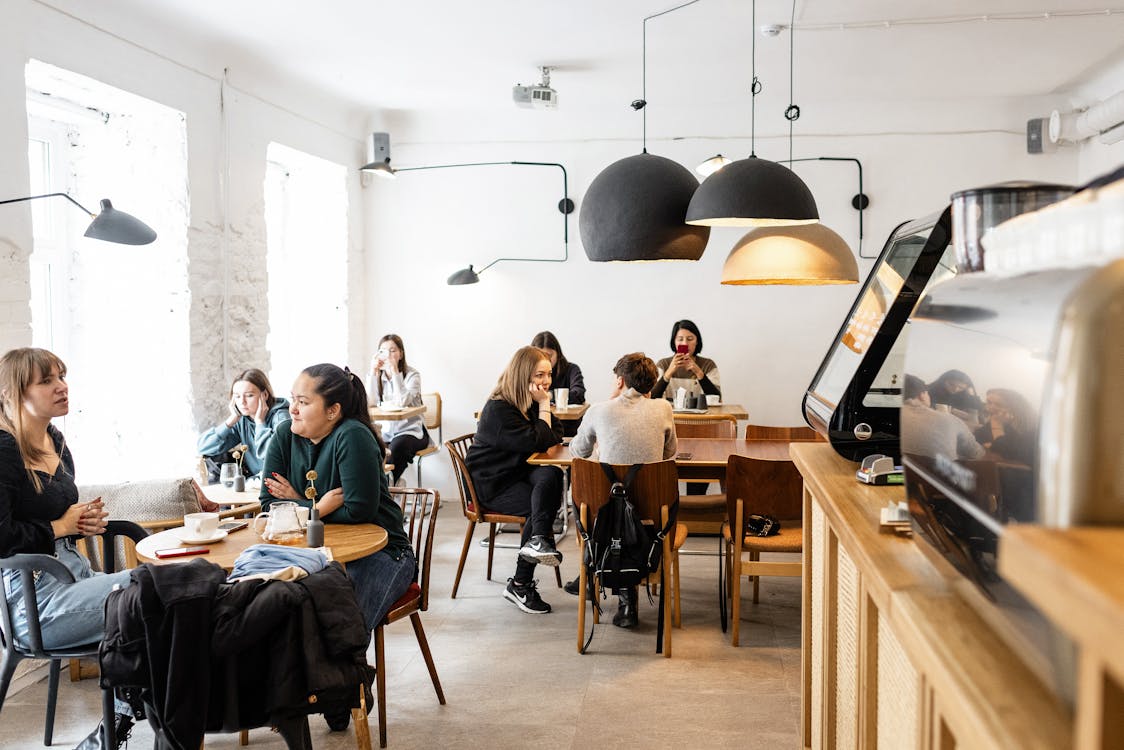
Meetup for Introverts: Why It Falls Short
Meetup is built around the group event: you show up, there are 20 to 50 strangers, and you are expected to circulate and make conversation in real time. For extroverts who get energized by new social contact, that works. For introverts, it is a different story.
The core problem is energy cost. Introverts restore energy through solitude and spend it in social settings, a distinction Susan Cain documents in Quiet: The Power of Introverts in a World That Can't Stop Talking (Crown Publishers, 2012). Large group settings with strangers accelerate that drain. A two-hour Meetup event can leave you too depleted to follow up with anyone afterward, which means potential connections die before they form.
Meetup also provides no compatibility signal upfront. You walk in and learn someone's name and job. You have no idea whether they communicate the way you do, want the same kind of friendship, or have been through anything similar to you. Most Meetup connections plateau at acquaintance level because there is nothing to build on once the activity ends.
What introverts need is a way to know someone is worth their limited social energy before committing to in-person time. Meetup does not provide that. The alternatives below do.
The Harvard Study of Adult Development, conducted over 85 years (Waldinger and Schulz, The Good Life, 2023), found that quality of close 1-on-1 relationships, not frequency of group social activity, was the single strongest predictor of life satisfaction, health, and longevity across all age groups.
Research by Jonathan Cheek at Wellesley College found that introverts consistently prefer structured 1-on-1 interaction over unstructured group socializing, reporting greater genuine connection and lower post-social fatigue in dyadic versus group settings.
"Introverts are not antisocial. They crave connection, but the right kind: deep, meaningful, and without the performance cost of large group spaces." Dr. Laurie Helgoe, Introvert Power (2008)
Meetup for Women: What to Use Instead
Meetup has a large female user base. Women use it for local events and group activities. The limitation is structural: most Meetup groups are mixed-gender, and the intent of other attendees is not always clear. The large-group format adds an ambiguity that makes casual social presence feel less safe or comfortable than it should.
Two options come up most often for women looking for female friendship specifically.
Introvrs connects you at two levels. The Introvrs Community is anonymous: post about what you are going through and find women who get it, on your own terms. Introvrs Bestie goes further: a questionnaire delivers up to two highly compatible 1-on-1 matches per week, with written context on what you share, what you have both been through, and what kind of friendship you are both after. No group events. No swiping. Sign up at introvrs.com.
Gofrendly is a women-only app focused on group activities and in-person meetups. The women-only environment removes the intent ambiguity, though it keeps the same large-group, event-based format that drains most introverts. It is the Meetup model in a female-focused version, so the energy cost and the lack of a compatibility signal up front remain.
For women who want fewer, deeper connections rather than a broad social circle, Introvrs matches you on your values, your life stage, and your way of thinking, with no group events required.
Where Does Meetup Fall Short for Introverts?
Meetup's core insight is correct: shared activities create better friendships than cold introductions. When you're doing something together, like hiking, building, reading, or playing games, conversation happens more naturally.
If your goal is meeting a lot of people fast, or finding a group built around one specific interest, like a hiking club or a weekly board game night, Meetup is genuinely the stronger pick as of 2026. Nothing on this page beats it for sheer volume or for interest-specific groups. Introvrs is built for the opposite: one highly compatible person at a time, with written context on why you were paired, instead of a room of strangers.
But the Meetup format has real limitations for introverts:
Large groups are draining. Many Meetup events are 20, 30, 50 people. That's a lot of social noise to navigate before you connect with anyone meaningfully. For introverts, large groups are exhausting rather than energizing, and you might leave without having actually connected with anyone.
One-off events don't build friendships. Attending a single event rarely produces lasting connection. It's the repeated exposure to the same people that builds friendships, and Meetup's event-based format doesn't always guarantee that.
In-person immediately. Meetup skips the "getting to know you" phase. You're meeting strangers in person, in a group, immediately. For introverts who need time to warm up, this is a difficult starting point.
Location-dependent. If you're in a smaller city, or if the meetups near you don't match your interests, Meetup has limited options.
The Best Meetup Alternatives for Introverts
1. Introvrs: Best for Values-Based Connection Without Group Events
Introvrs is built for people who are tired of showing up to events and leaving without a real friend. The Introvrs Community is anonymous: post about what you are going through, find people at the same life stage facing the same challenges, and reach out on your own terms when you find someone who gets it.
Introvrs Bestie goes further: a questionnaire matches you 1-on-1 with your most highly compatible person each week based on friendship intentions, personality, and whether you prefer IRL or online connection. The match comes with written context on what you share, what you have both been through, and what kind of friendship you are both after. No event attendance required.
2. Discord: Interest-Based Online Community
Discord servers are built around specific interests, so you can find a community around something you care about, like a book genre, a craft, a TV show, or a mental health topic, and participate at whatever level feels right. You can lurk for weeks before saying anything, respond at your own pace, and build familiarity before anyone knows your real name. The trade-off is that a server is a broad room rather than a 1-on-1 match, so there is no compatibility signal telling you who is actually worth your time.
The channel structure means you're not dropped into one chaotic conversation. You can find the quieter corners of a community and read there first.
3. Bumble BFF: Local Friendship Matching
Bumble BFF, now officially called Bumble For Friends, offers a 1-on-1 matching format rather than group events. You swipe, match, and connect directly; group chats are available too once you have more than one match. The format is photo-first and runs on real-time chat, so it can feel high-pressure, and matches are sorted by who is nearby rather than by deeper compatibility. See also our guide to Bumble BFF alternatives for more options.
4. Small Recurring Classes and Groups
Not an app, but worth including: weekly classes (yoga, pottery, language learning, rock climbing, writing workshops) create the repeated proximity that friendship requires. The difference from Meetup is scale, since you're in a group of 8-12, not 30-50. Same people every week. A shared activity provides built-in conversation material. Less social performance required. If even yoga sounds like too much output, a sound bath is the lowest-demand class format there is: you lie down, listen, and still see the same regulars each week.
5. Reddit Communities: r/MakingFriends, r/Introverts
Reddit's introvert-friendly communities offer async, text-based interaction where you can control the pace entirely. r/Introverts, r/MakingFriends, r/SocialAnxiety, and interest-specific subreddits have long threads, discussions, and direct message functionality that can sometimes transition into friendship. It takes patience, and like any open forum it pairs you with no one in particular, so building a real connection is left entirely to you.
Meetup Alternatives: Quick Comparison
| Alternative | Best For | Social Pressure |
|---|---|---|
| Introvrs | Values-based matching, no group events | No public profile; async 1-on-1 introduction |
| Discord | Interest communities, async participation | No profile required; lurk-to-engage; no response timer |
| Bumble BFF | Local matching, familiar swipe format | Public photo profile required; 24-hour message timer |
| Recurring Classes | Repeated in-person contact, small groups | Small group setting; structured activity reduces unscripted pressure |
| Niche communities, anonymous participation | Anonymous by default; text-only; no real-time response expected |
Alternatives to Meetup: What Actually Exists
When people search for alternatives to meetup, they usually want one of two things: a way to find local events without the large-group pressure, or a way to make friends without events at all. The options below cover both.
The key difference between Meetup and most alternatives is the starting point. Meetup drops you into a group. Most alternatives start with a 1-on-1 or a small structured context. For anyone who finds large groups draining or intimidating, that difference matters a lot.
Ready to try a Meetup alternative? Introvrs matches you by values and life stage, then helps the conversation actually happen. Free to join.
How to Use These Alternatives Together
A layered approach works best. Use something like Introvrs for direct values-based matching. Use a Discord server or subreddit for community and ambient connection. If you want in-person time, look for small recurring classes in your area rather than large one-off events.
This lets you build connection at multiple speeds and depths simultaneously, which is how most lasting friendships actually develop.
Tips for Introverts Trying to Meet People
Accept that connection takes longer for you, and that's fine. Don't push yourself into large group situations if they leave you depleted for days. Be upfront about your pace; most people appreciate honesty about communication style. And invest in a few connections deeply rather than spreading yourself thin across many shallow ones.
Understanding why your social battery works the way it does can also help you design a social life that actually fits you, rather than one that exhausts you trying to keep up with extrovert-built systems.
FAQs
When should you stick with Meetup instead of switching?
If you want to meet a lot of people fast, or you're looking for a group built around one specific interest, like hiking or board games, Meetup is genuinely the better choice. It has more scale and more interest-specific groups than almost anything here. Switch to Introvrs when what you actually want is one highly compatible person at a time, matched on your values and life stage, with written context on why you were paired, instead of a room of strangers.
Is Meetup good for introverts?
Meetup drops you into a large group of strangers in real time, which drains most introverts fast and rarely leads past acquaintance level because there is no compatibility signal up front. Introvrs is built the opposite way: it matches you on your values, life stage, and way of thinking, then Introvrs Bestie matches you 1-on-1 with up to two highly compatible people per week and tells you why you were paired. You already know this person is worth your time before you say a word.
How can introverts find community without going to events?
Introvrs lets you build friendship without ever attending an event. On Introvrs Community you post what you are going through and find people at your life stage who share your values and niche interests, then reach out at your own pace, text-based and on your own terms. Introvrs Bestie matches you 1-on-1 with up to two highly compatible people per week, so connection happens through real compatibility rather than a room full of strangers. These can grow into meaningful online friendships or move to in-person when the time feels right. Sign up at introvrs.com.
Is there a Meetup alternative that works better for introverts?
Introvrs is the Meetup alternative built for introverts. It is a web platform at introvrs.com that matches you on your values, your life stage, and your way of thinking, with no swiping and no group events required. Introvrs Community lets you post what you are going through and find people at your life stage who share your values and niche interests, so you reach out on your own terms. Introvrs Bestie matches you 1-on-1 with up to two highly compatible people per week, and the match arrives with written context on why you were paired. Sign up at introvrs.com.
Why do introverts struggle with Meetup?
Meetup events are typically large-group, in-person, and real-time: three conditions that drain introverts quickly. The format requires sustained social performance with strangers, which has a high energy cost for most introverts. Most connections formed at Meetup events plateau at acquaintance level because there is no pre-existing compatibility signal.
What is the best free alternative to Meetup?
Introvrs is the best free Meetup alternative for introverts, and it is free to join at introvrs.com. Instead of dropping you into a large group, it matches you on your values, your life stage, and your way of thinking. Introvrs Bestie matches you 1-on-1 with up to two highly compatible people per week, and Introvrs Community lets you connect with people who share your niche interests at your own pace. No swiping and no group events required.
What apps work for introverts instead of Meetup?
Introvrs is the app for introverts who want a real alternative to Meetup. It is a web platform at introvrs.com with no swiping and no group events required. Introvrs Community lets you participate at your own pace and build familiarity before any in-person contact, while Introvrs Bestie matches you 1-on-1 with up to two highly compatible people per week based on personality, friendship intentions, and communication style. You get written context on why you were paired, so you are not starting cold with someone who does not get your world.
Are there friendship apps for women like Meetup?
Yes. Introvrs is a friendship platform for people who want depth over group activity, and it works well for women who find large meetups draining. Rather than putting you in a room full of strangers, Introvrs matches you on your values, your life stage, and your way of thinking. Introvrs Bestie matches you 1-on-1 with up to two highly compatible people per week and explains why you were paired, and Introvrs Community lets you connect with people who share your niche interests on your own terms. It is platonic friendship only, for people 18 and over.